Improving Internship Accessibility for University Students
Duration
Jul 2025 - Sep 2025
Team
Dang Vu Quynh Anh
Pham Doan Khanh
Ho Huyen
Le Nguyen Tuan
Target users
Students Seeking Internships

Overview
This project started with a simple question from our instructor - Mr. Nguyen Vuong Chung:
“How might we help students get more internship opportunities?”
At first, it sounded like a job platform problem. But as my team and I went deeper, we realized the issue was not just about access. It was about how students understand themselves, prepare, and navigate the entire journey.
How We Approached the Research
We followed a Design Thinking process, but not in a rigid way.
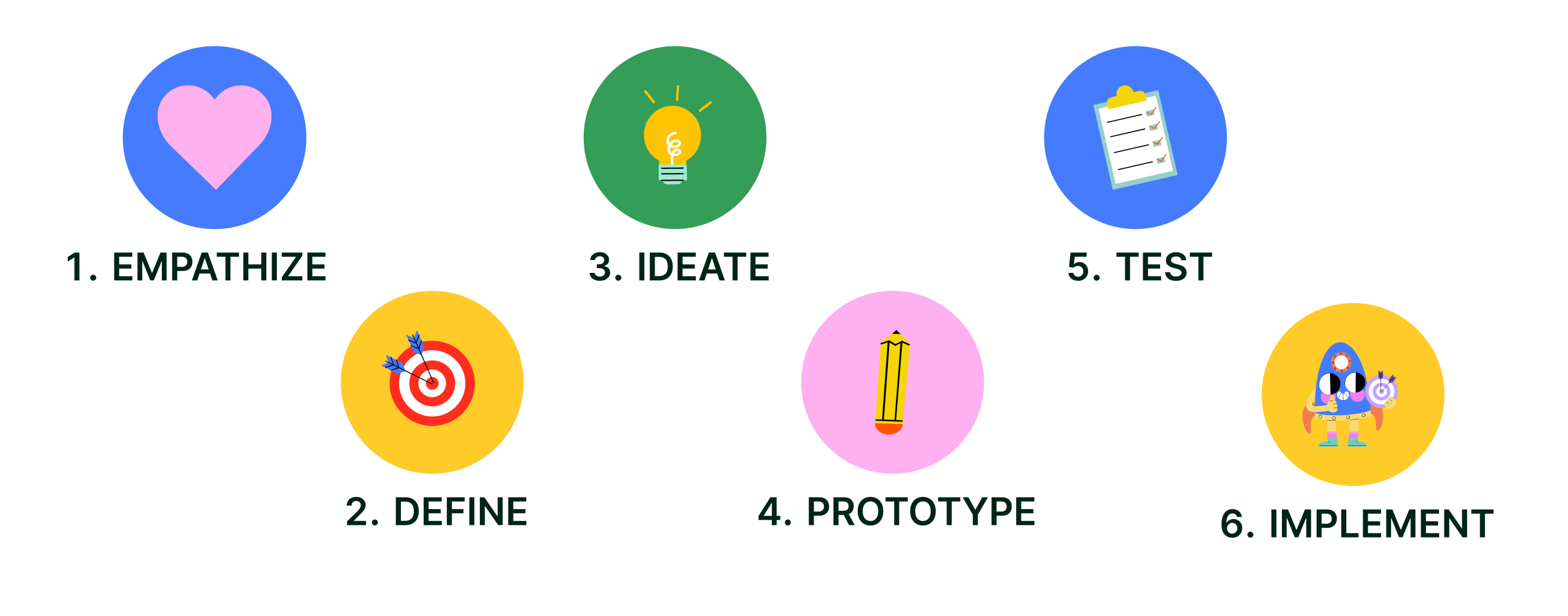
Since this project was part of a 2-month course, with only about 1 month of actual hands-on work, we didn’t try to cover every stage in depth.
Instead, we focused on going deeper into Empathize and Define, making sure we were solving the right problem before jumping into UI.
Stage 1 - Empathize
1.1 Desk Research
We started by reviewing the problems identified by the team and began our analysis.
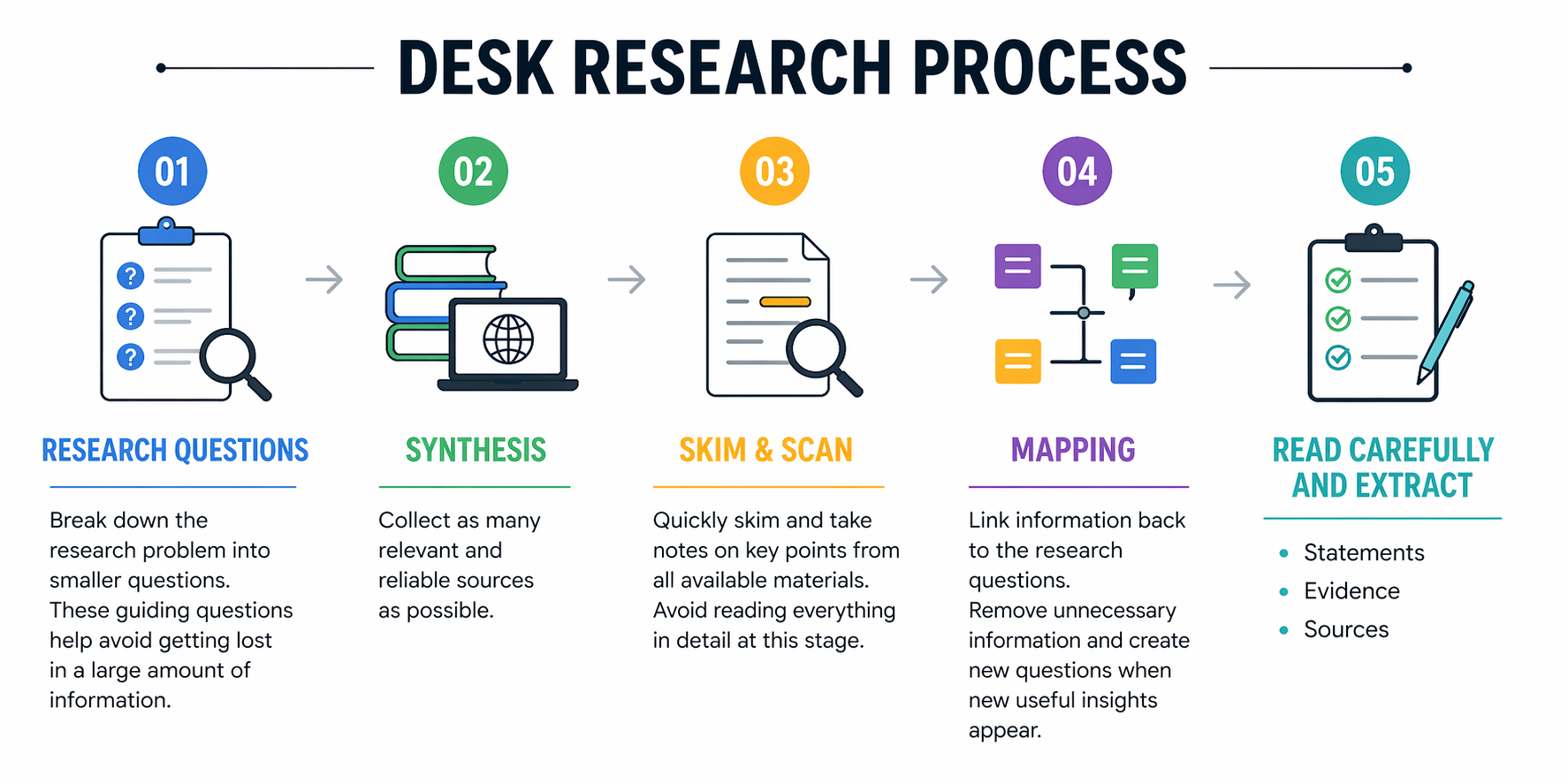
After applying the 5W1H method, we narrowed down the key research problems to focus on:
01
To understand the current context and internship needs of university/college students (aged 19–23).
02
To understand students’ career orientation, influencing factors, and challenges when searching for internships.
03
To understand the university context, including limitations and existing support systems.
04
To understand the needs, barriers, and challenges employers face when recruiting interns
Each team member focused on one specific issue in depth. We collected and saved reliable sources from state-run newspapers, Q&Me, and Google Scholar.
At the same time, we skimmed and scanned materials to capture key insights, so other team members could quickly catch up.
Voilà!
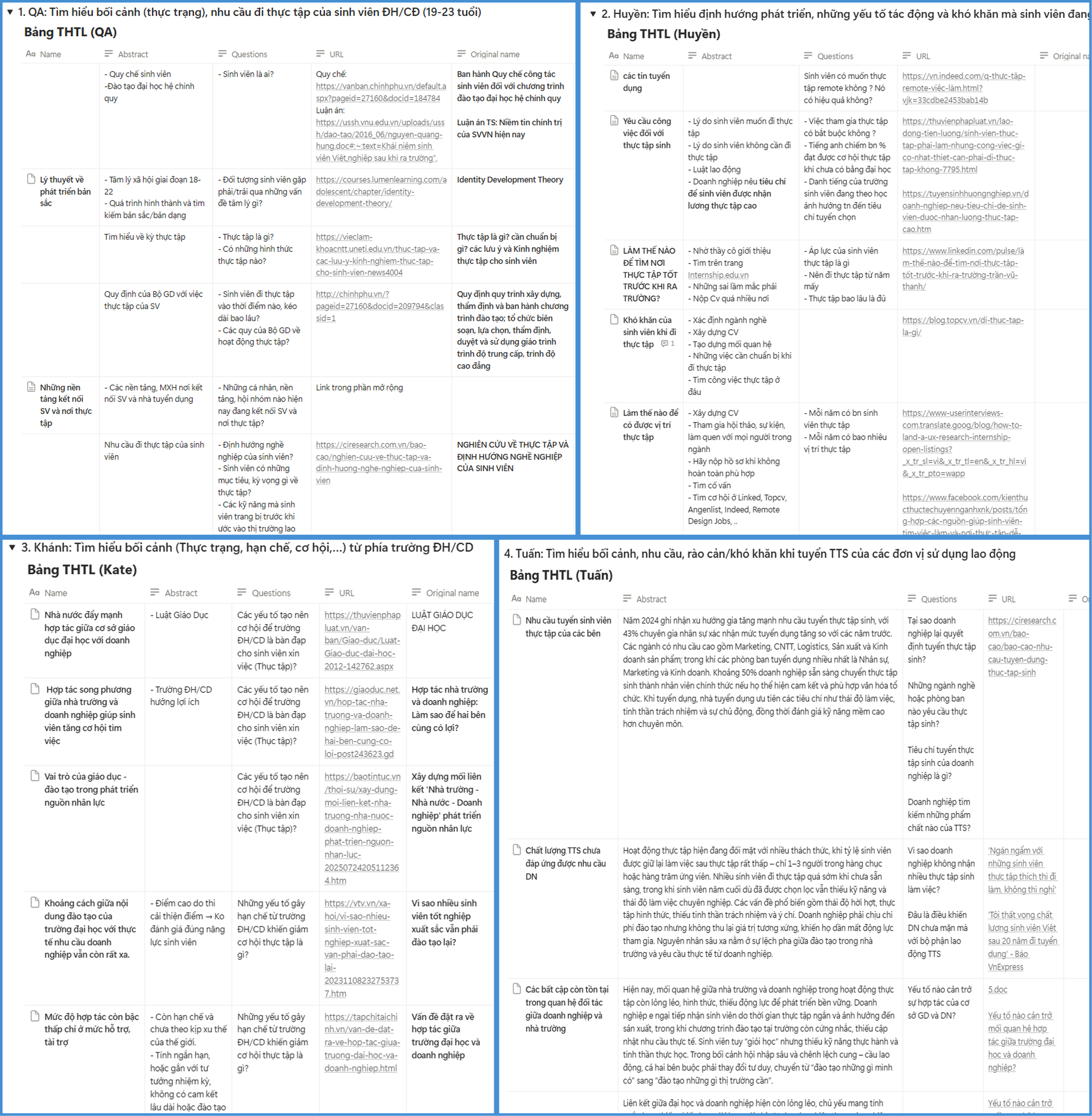
After gathering enough insights, we held a meeting to align on how to approach user interviews, so we wouldn’t go in blindly or ask scattered questions.
💼
For Employer / Recruiter Group
+ Understand why companies hire interns
+ Identify expectations toward interns
+ Explore the recruitment process (sourcing, screening, evaluation criteria, challenges)
+ Evaluate the effectiveness of internship programs
+ Identify key pain points in the process
🎓
For Student
+ Explore how students search for internship opportunities
+ Understand their needs, goals, and motivations
+ Evaluate the effectiveness of current processes and channels
+ Identify challenges and barriers
+ Measure the gap between expectations and reality
+ Capture needs and suggestions for improvement
1.2 Interview & Empathy
We identified the target group for the interview.
💼
Employer / Recruiter Group
Age: 28–40 years old
Location: Living and working in Vietnam
Criteria: Individuals who have recruited interns and have at least 2 years of recent experience in hiring interns.
🎓
Student
Age: 19–24 years old
Location: Living and studying in Vietnam
Criteria: Students who are currently applying or have applied for internships
Focus areas: General user profile. Application behaviors and influencing factors. Channels and methods currently used. User needs and expectations.
To make the interviews smooth and comfortable, we prepared separate scripts for each group.
We then split the work within the team to make sure we could cover all key questions and gather the right insights.
Each interview will consist of two people: 1 main interviewer and 1 person to record the information and audio.
In total, over two weeks, we interviewed 14 participants, including 9 students and 5 HR professionals.
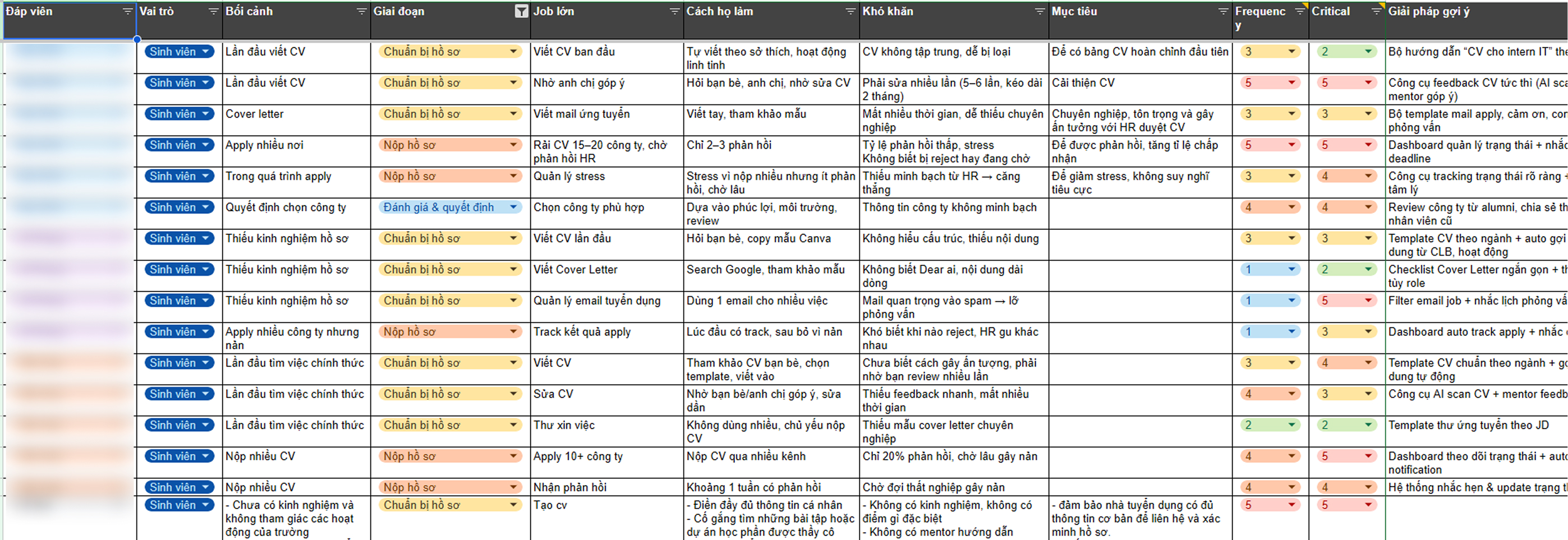
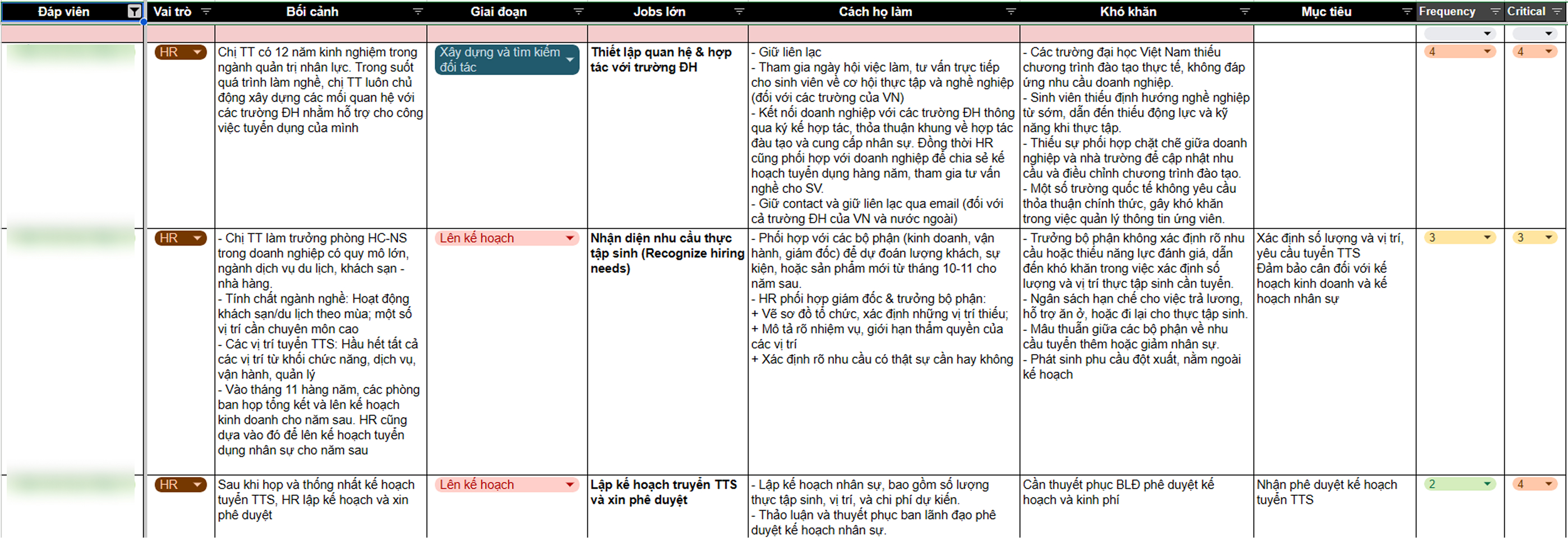
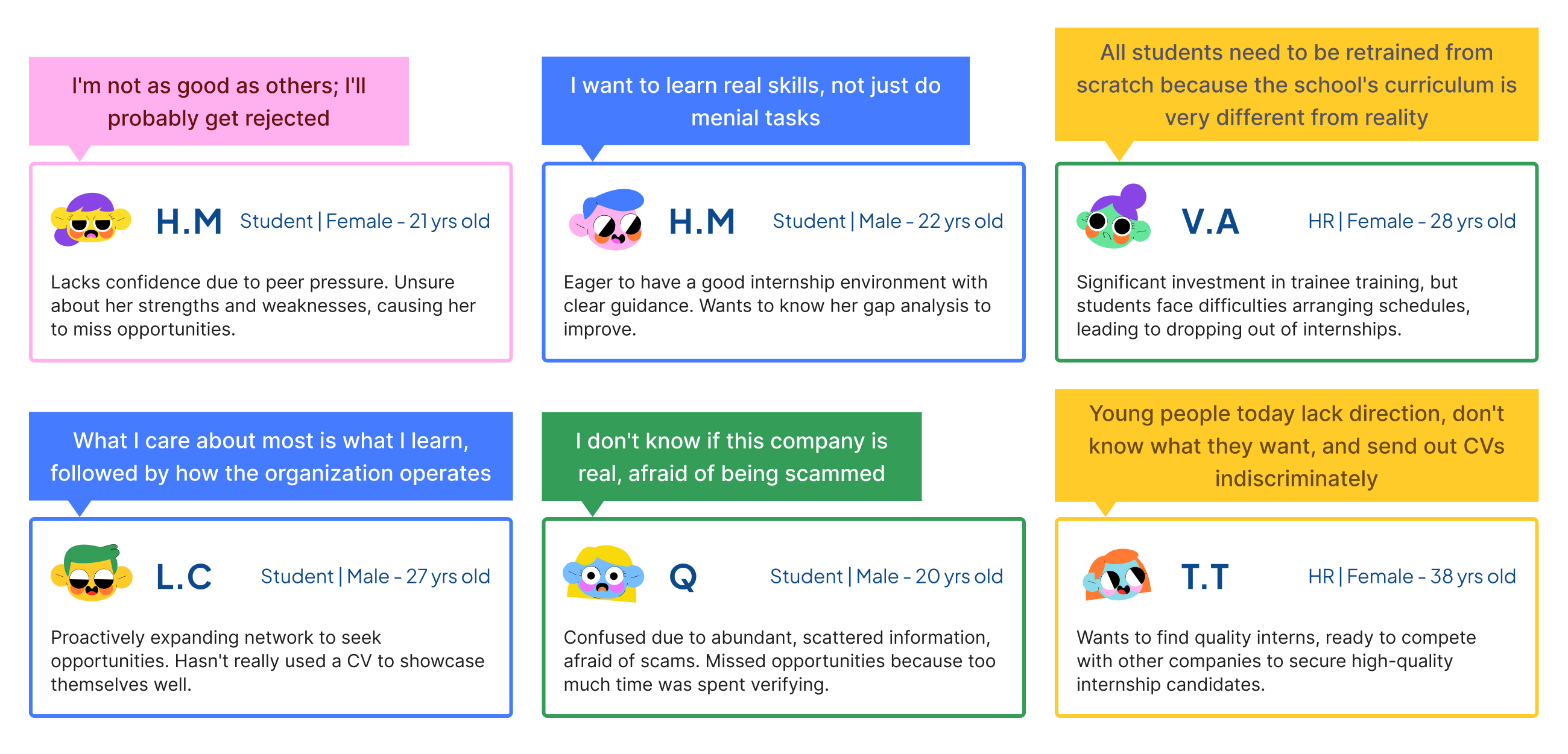
New observations:
💡 Insight #1 - Students tend to look for company details that match their CVs when applying.
“Cái việc mà sửa lại CV cho phù hợp với cái JD cũng là 1 cái cách nó hay, nhưng mà nó hiện tại mình không có sửa cái này à, lúc mà tìm thì chủ yếu là tìm những cái người ta tuyển mà skill nó nằm trong CV của mình rồi. Nên không cần sửa CV gì mấy” - Student 1
💡 Insight #2 - Students fail to manage all the companies they apply to, leading to missed opportunities via email and phone calls.
“Mình bị sử dụng 1 cái mail cho nhiều thứ. Nhiều khi mình không thể track được những cái mail tuyển dụng tới, điển hình là mình từng bỏ lỡ hết 2 cái phỏng vấn với Tiktok tại vì 2 cái mail phỏng vấnl đó nằm vô mail rác.” - Student 2
Stage 2 - Define
2.1 Characteristics of target groups
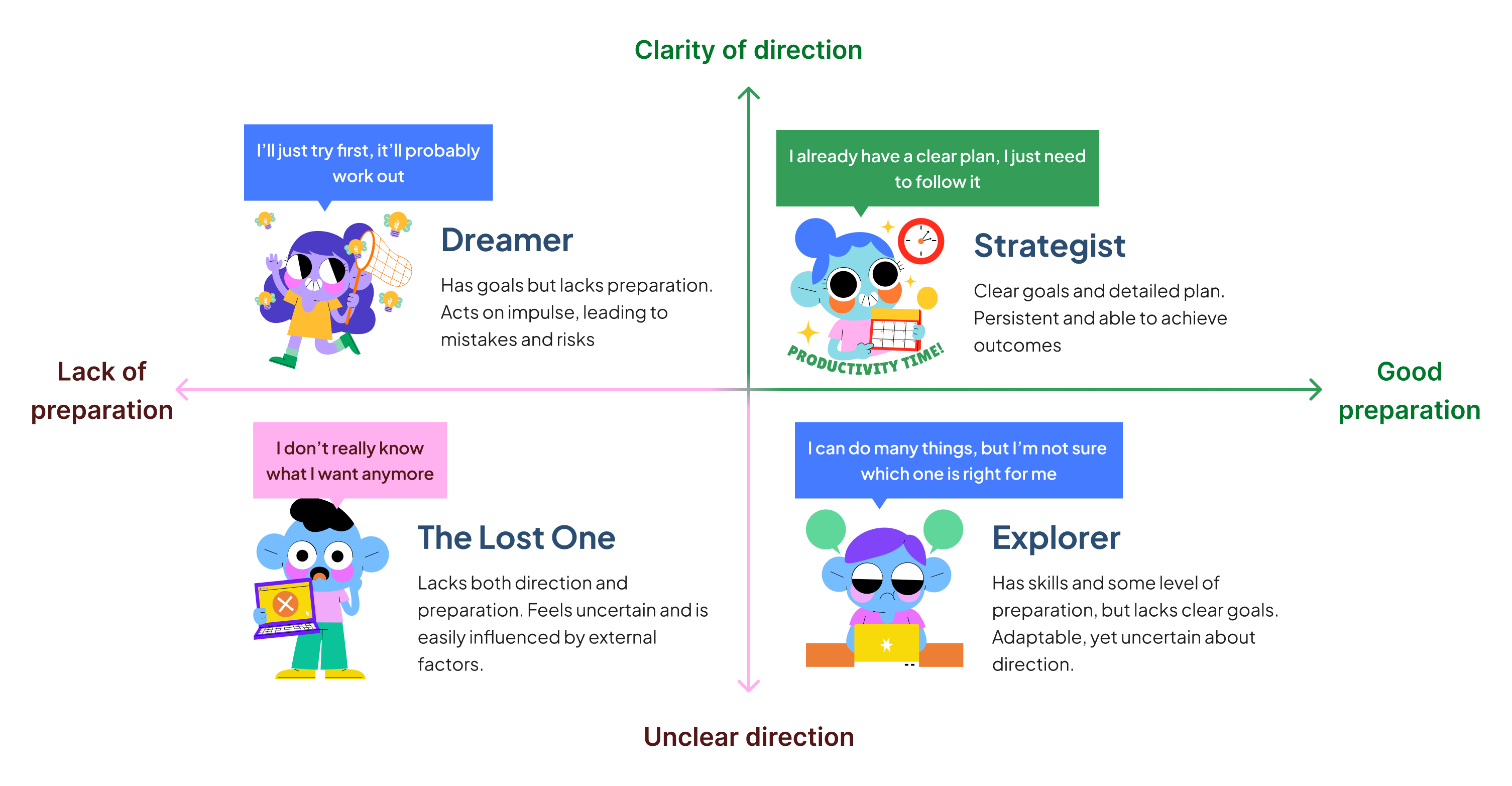
We analyzed the data from the interviews and segmented users based on a behavioural perspective.
A student’s success in job applications is shaped by two key factors: direction and preparation.
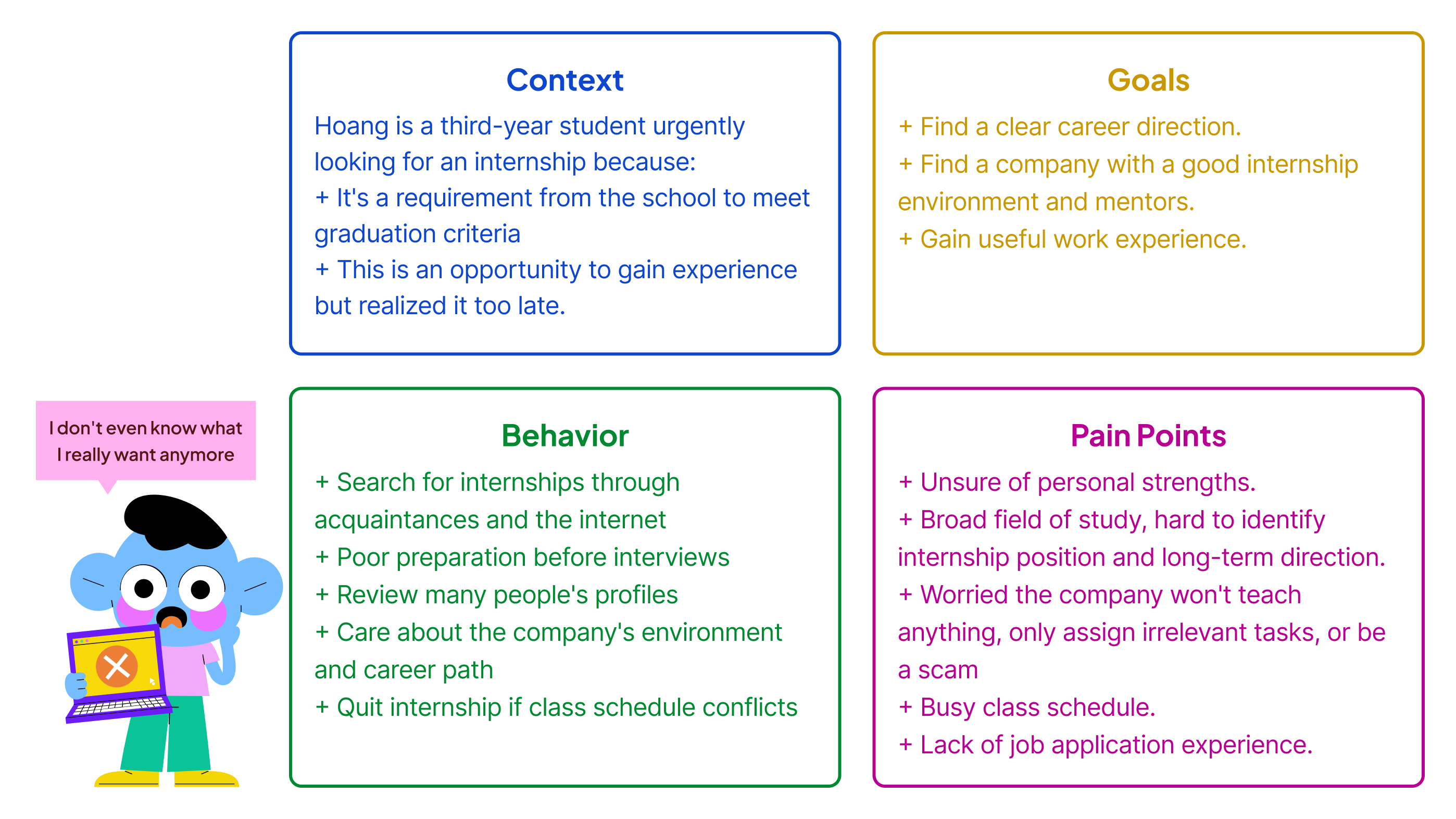
2.2 Persona group aiming for
2.3 Customer journey map
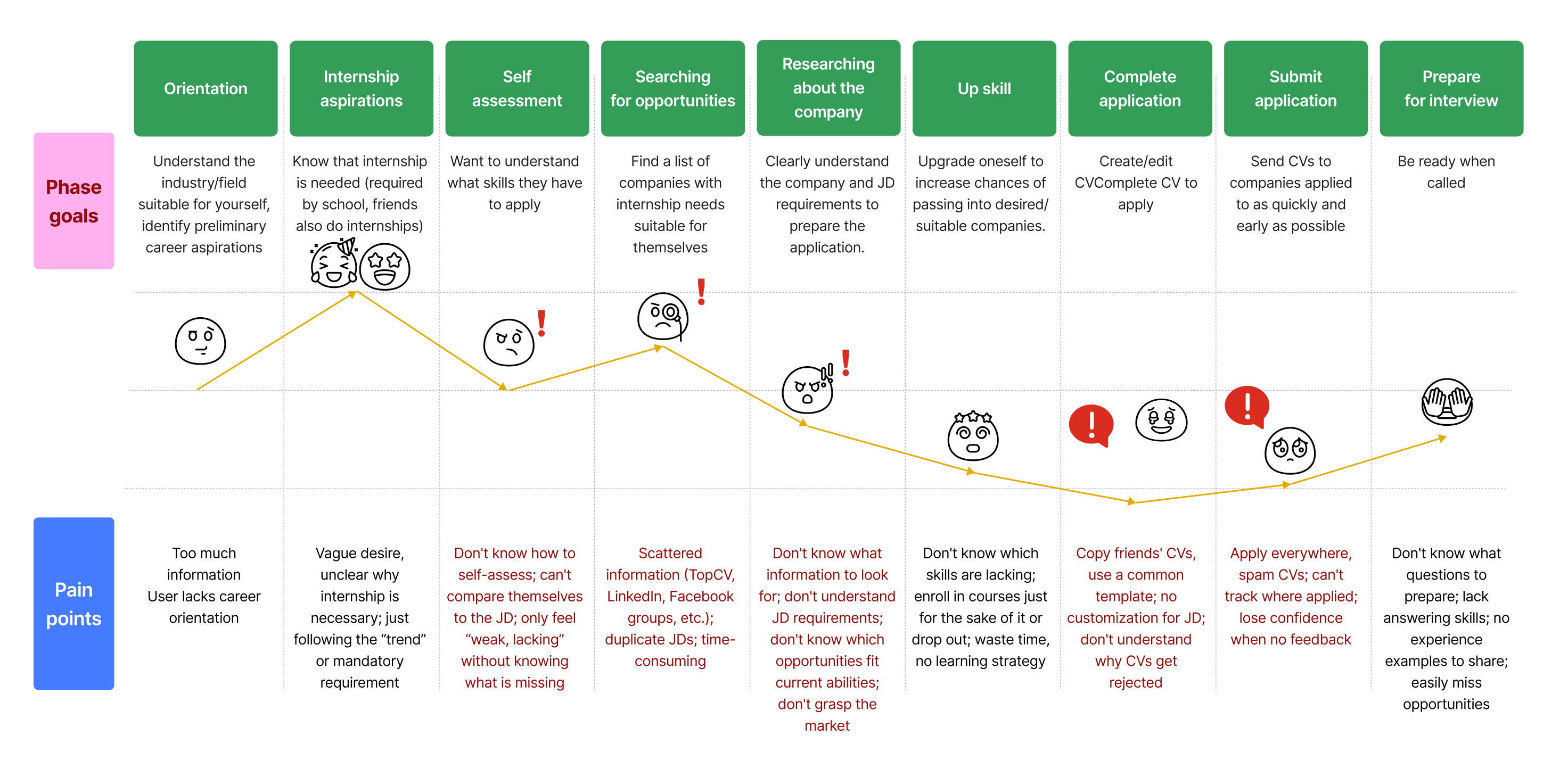
2.4 How Might We
HMW "help students fully prepare for the entire job application process to show recruiters their potential"?
01
Support students in making the application process smooth and fast so they can focus on interviews and showcasing themselves.
02
Meet employer expectations. Help employers recognize potential and skills right from the CV stage.
03
Have a suitable application pathway, not just stopping at applying for a single job.
Stage 3 - Ideate
3.1 Solution audit
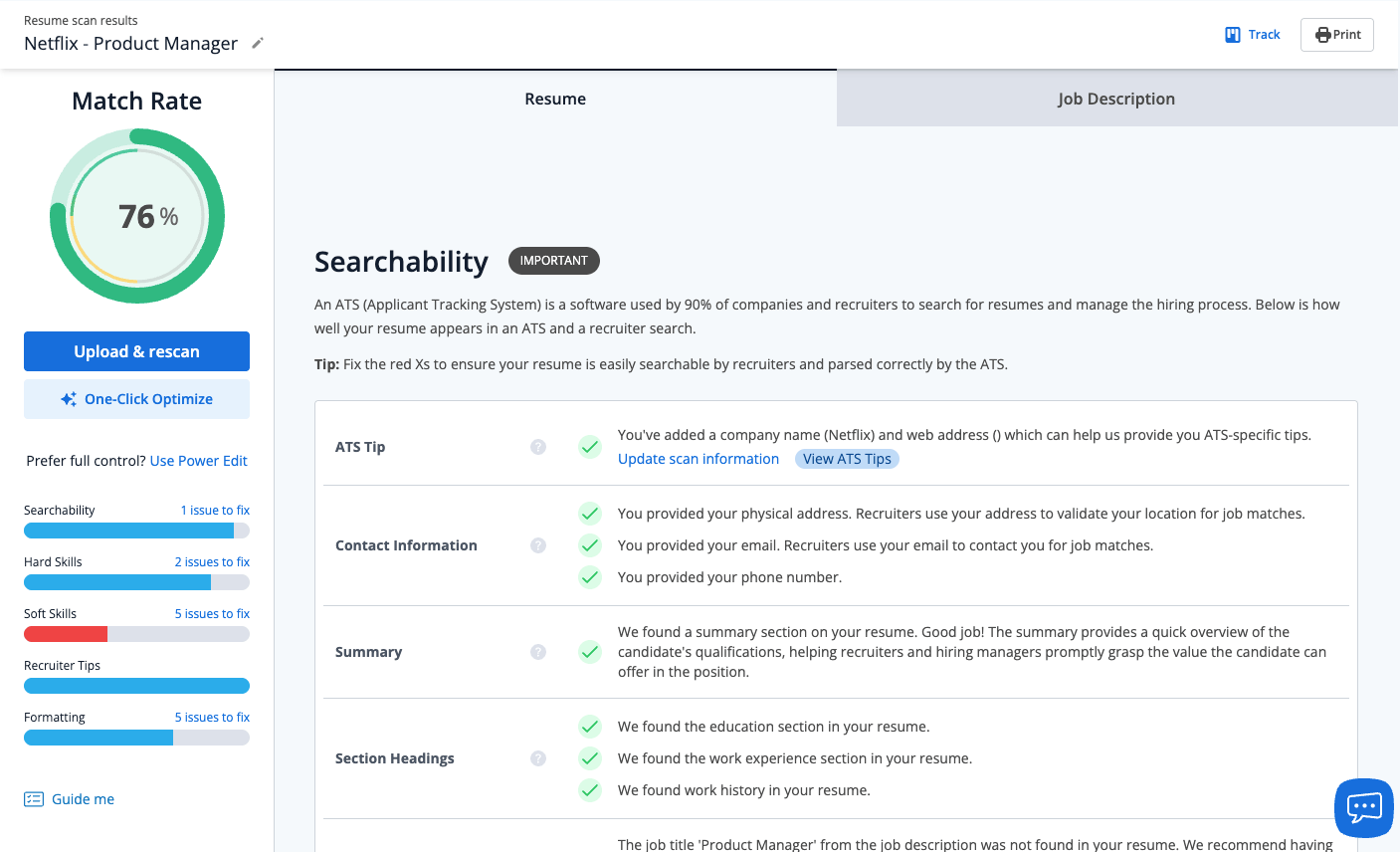
3.1.1 Scan CV & JD compare and improve
✅
Capabilities
Resume vs JD match: scan CV against a job description and get a match score
Keyword optimization: extract and suggest missing keywords from JD
Score breakdown: show detailed feedback by skills, formatting, and tips
😰
Pain points
Over-focus on keywords: may lead to unnatural, keyword-heavy writing
Score reliability: high score doesn’t guarantee interview results
Generic feedback: suggestions can feel templated and shallow
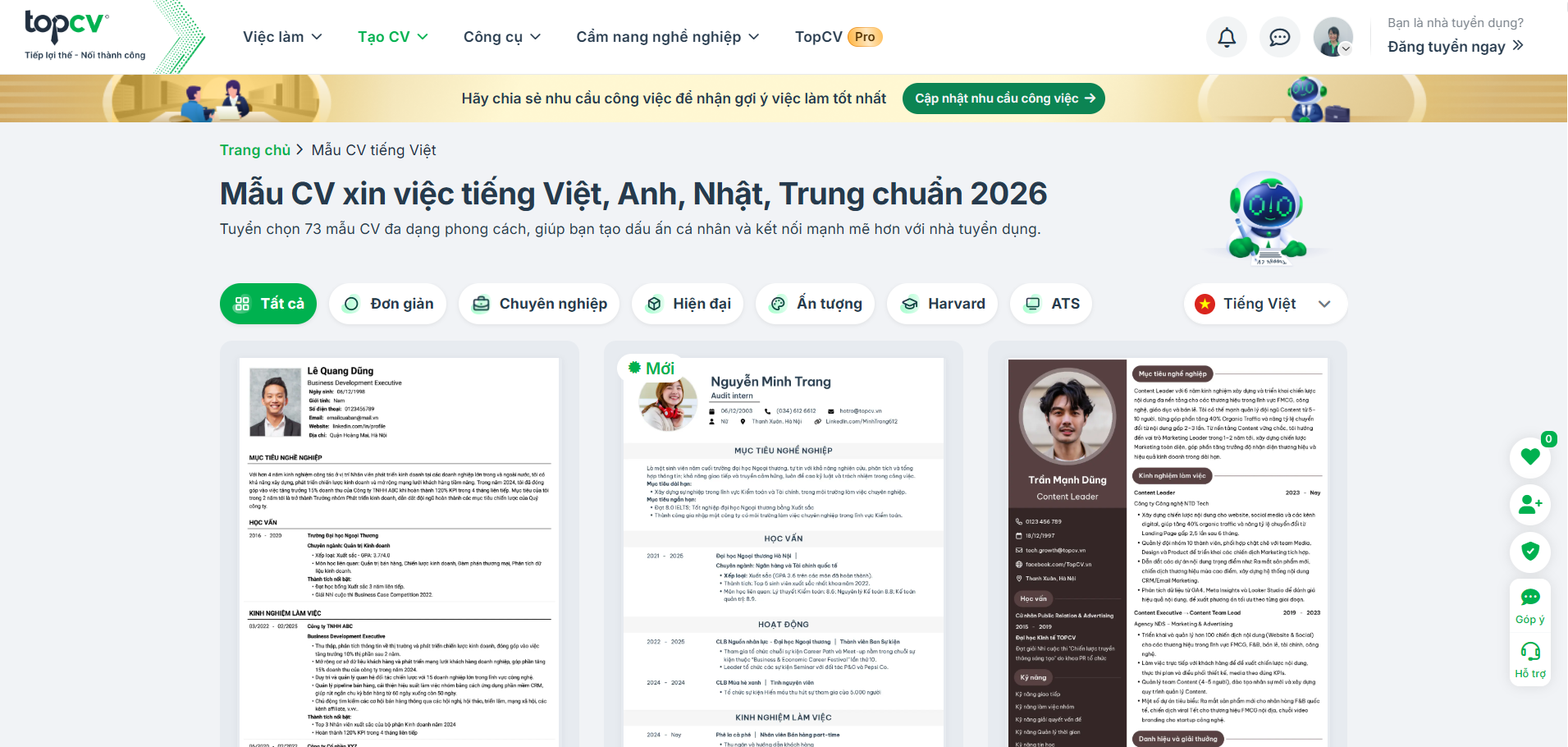
3.1.2 Suggest creating CVs tailored to the selected JD
✅
Capabilities
JD-based content suggestions: recommends skills and responsibilities aligned with the selected job
Auto-generated CV drafts: creates initial CV content from JD input
Quick customization: allows fast editing for different job applications
😰
Pain points
Generic suggestions: content can feel templated and lack personal differentiation
Weak context understanding: doesn’t fully reflect user’s real experience or impact
Overfitting to JD: may encourage copying JD language instead of authentic storytelling
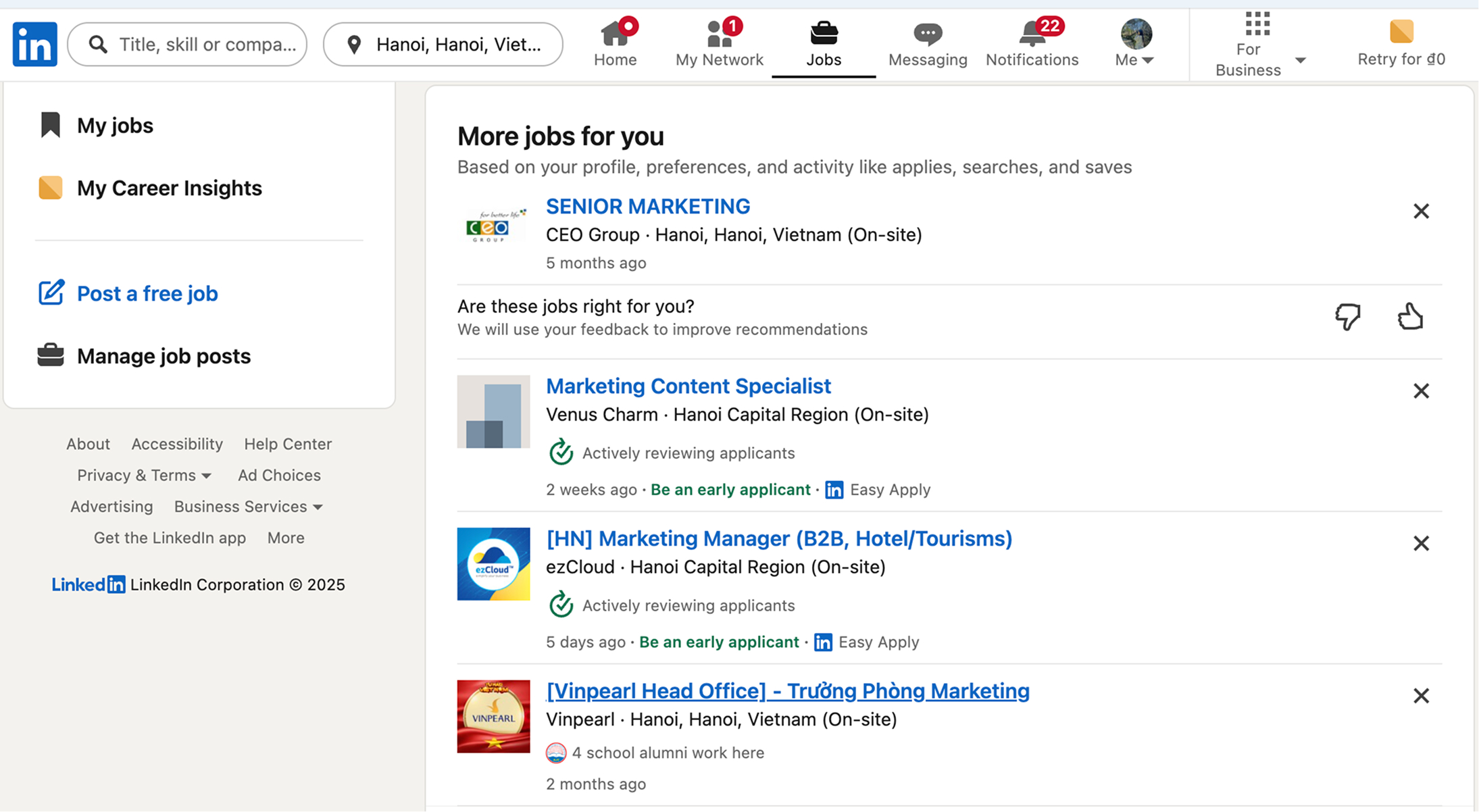
3.1.3 Suggest JD with CV matching score
✅
Capabilities
Job fit scoring: shows how well your profile matches a job (skills, experience, keywords)
Skill gap insights: highlights missing or weak skills compared to the JD
Profile-based matching: uses your LinkedIn profile instead of requiring a separate CV
Real-time suggestions: updates fit signals as you edit your profile
😰
Pain points
Surface-level matching: relies heavily on keywords, not depth or impact
Limited transparency: unclear how the matching score is calculated
Weak for niche roles: struggles with specialized fields (e.g. UX strategy, product thinking)
3.2 Ideation workshop
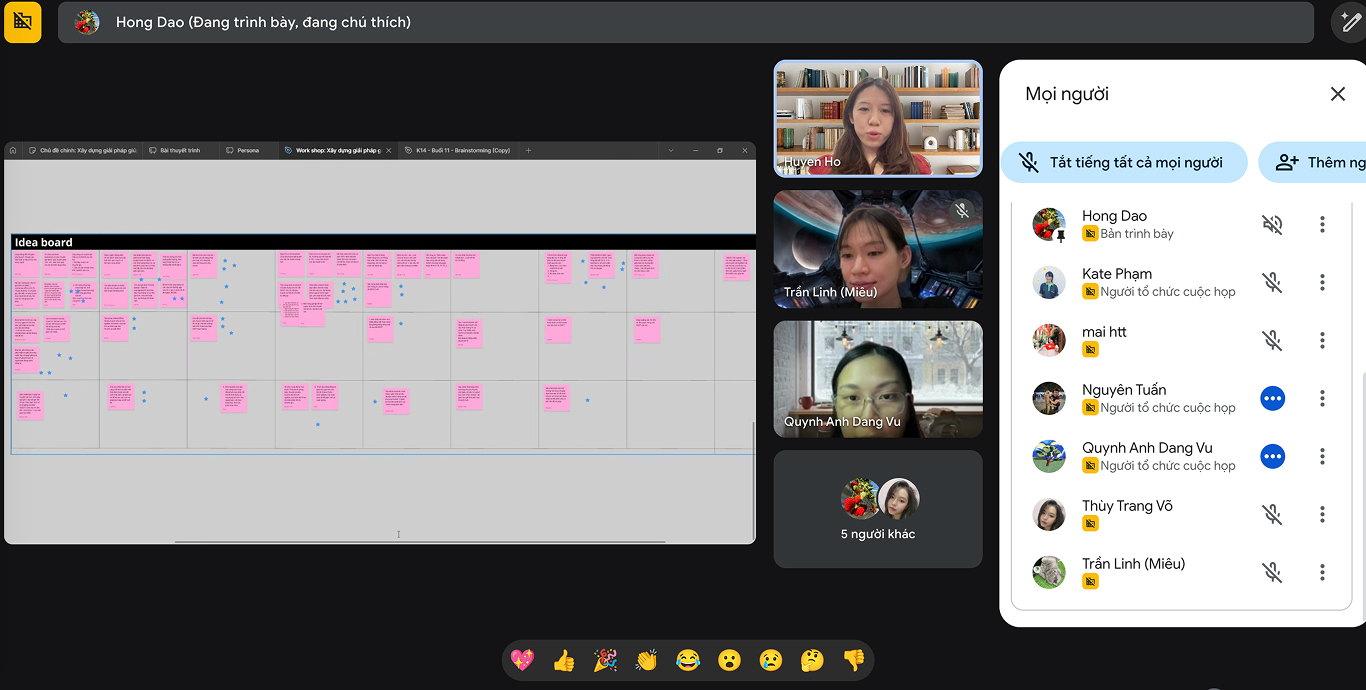
3.3 Group decision solution

📸 Inspired
A product that helps students prepare well for the application process (specifically the CV round), understand their strengths and gap analysis for each job, thereby improving themselves and finding suitable jobs, increasing internship opportunities.
📌 Value proposition
A product that can update and aggregate job descriptions from all platforms, helping students quickly compile and compare to edit their CVs more efficiently.
Stage 4 - Prototype
Solution 1: Find the perfect job description across every platform, in minutes.
Context
When Minh has his CV ready and starts job hunting, he has to visit multiple recruitment platforms to find JDs that match his profile. He reads through each listing one by one, manually comparing them to filter out the best fits before applying.
Solution

How it work?
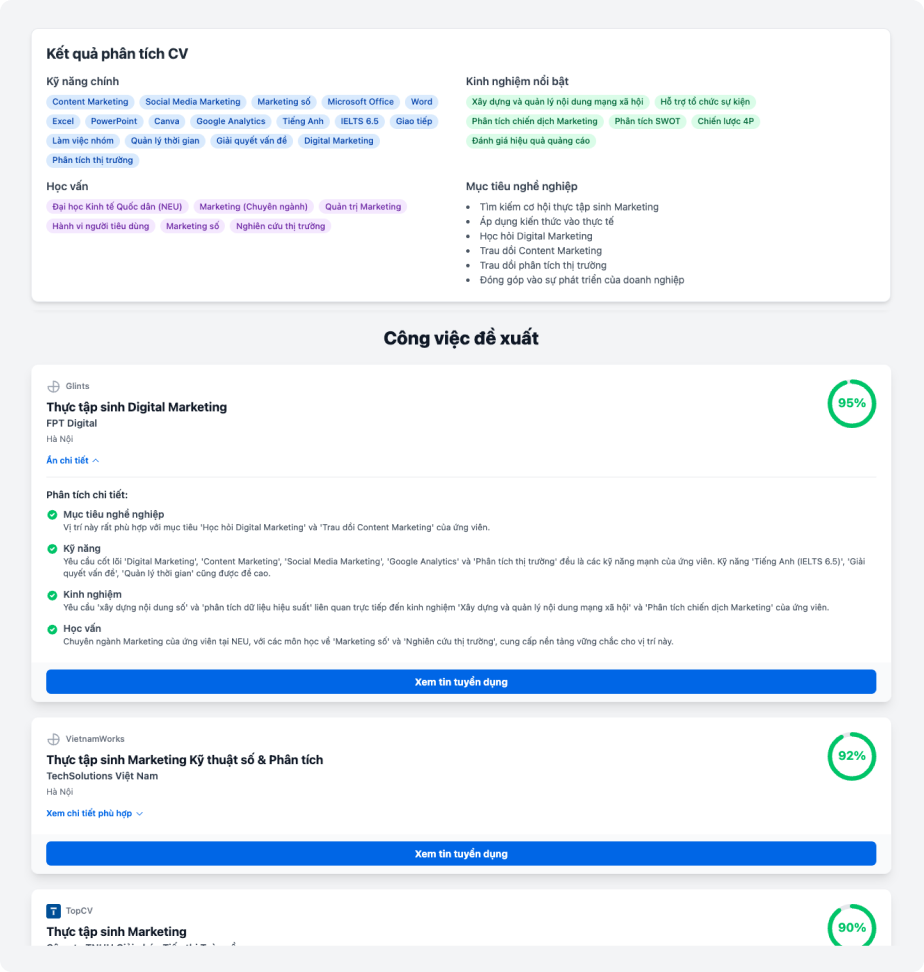
The system uses web scrapers and APIs to automatically collect job listings (JDs) from multiple platforms like LinkedIn, TopCV, and Facebook. This data includes job titles, descriptions, skill requirements, locations, and more.
When a user uploads their CV, the system uses NLP (Natural Language Processing) to analyze its content, identifying and comparing key criteria between the CV and available JDs.
Results are then ranked based on four matching criteria designed to maximize hiring chances: Skill Match, Experience Match, Culture and Direction Match, and Competition Score. JDs with the highest match scores are pushed to the top.
Why it work?
Save Time: Instead of spending hours searching manually across multiple platforms, users simply upload their CV once and instantly receive a curated list of the most relevant JDs.
Never Miss a Great Opportunity: Helps users discover job opportunities they might have overlooked with traditional search methods, connecting them with roles that truly match their skills and experience.
Solution 2: Suggests the right courses for you, based on your CV and target JD.
Context
Minh found a JD he likes but his match score is low. He wants to close the gap by improving his skills, so he starts searching online for courses that cover what his CV is missing.
Solution

How it work?
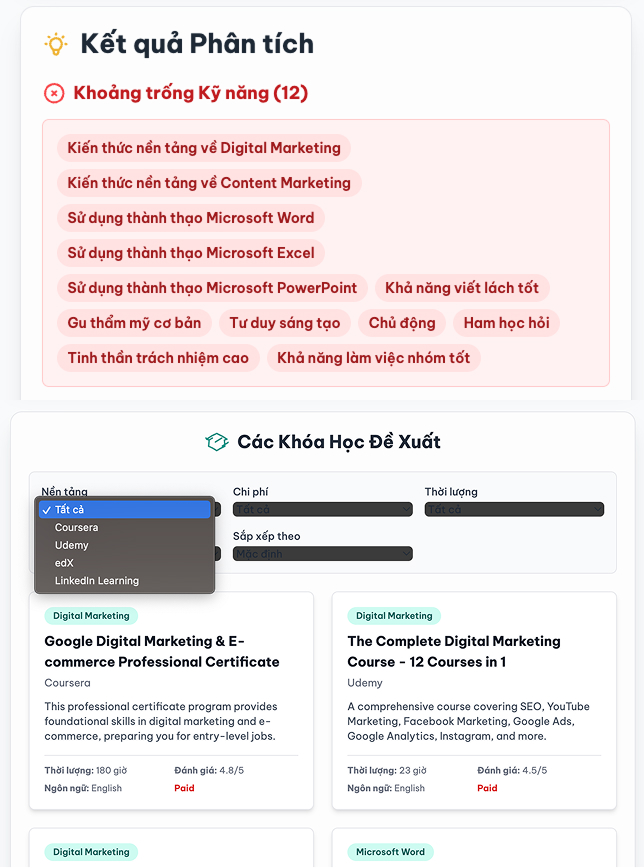
Analyze CV and JD: Extract and list both hard skills and soft skills from each document.
Identify Skill Gaps: Pinpoint skills required in the JD that are missing or underrepresented in your CV.
Search and Recommend Courses: Surface relevant courses with filters for platform, price, rating, duration, and language.
Suggest a Learning Path: Prioritize and sequence the recommended courses into a clear roadmap.
Why it work?
A Clear Development Path: Users know exactly what to learn to reach their career goals, with no more scattered or directionless studying.
Better Hiring Chances: By building the skills employers are looking for, users directly improve their CV-JD match score, leading to more interview invitations and job offer
Project Story
Working with the team was honestly half the story.
Different schedules. Different cities. Different working styles. Sometimes it felt like scheduling a meeting was harder than the research itself.
But we made it work.

We kept things simple:

Regular check-ins to stay in sync
Shared docs so no one got lost
Clear ownership so things actually moved
Not perfect, but consistent. And that’s what kept the project going.
Thanks for making it this far
If something caught your eye, I'd love to talk through it
If something caught your eye, I'd love to talk through it
More Projects

Every project starts with a story. I turn those stories into digital experiences that feel effortless and expressive.